
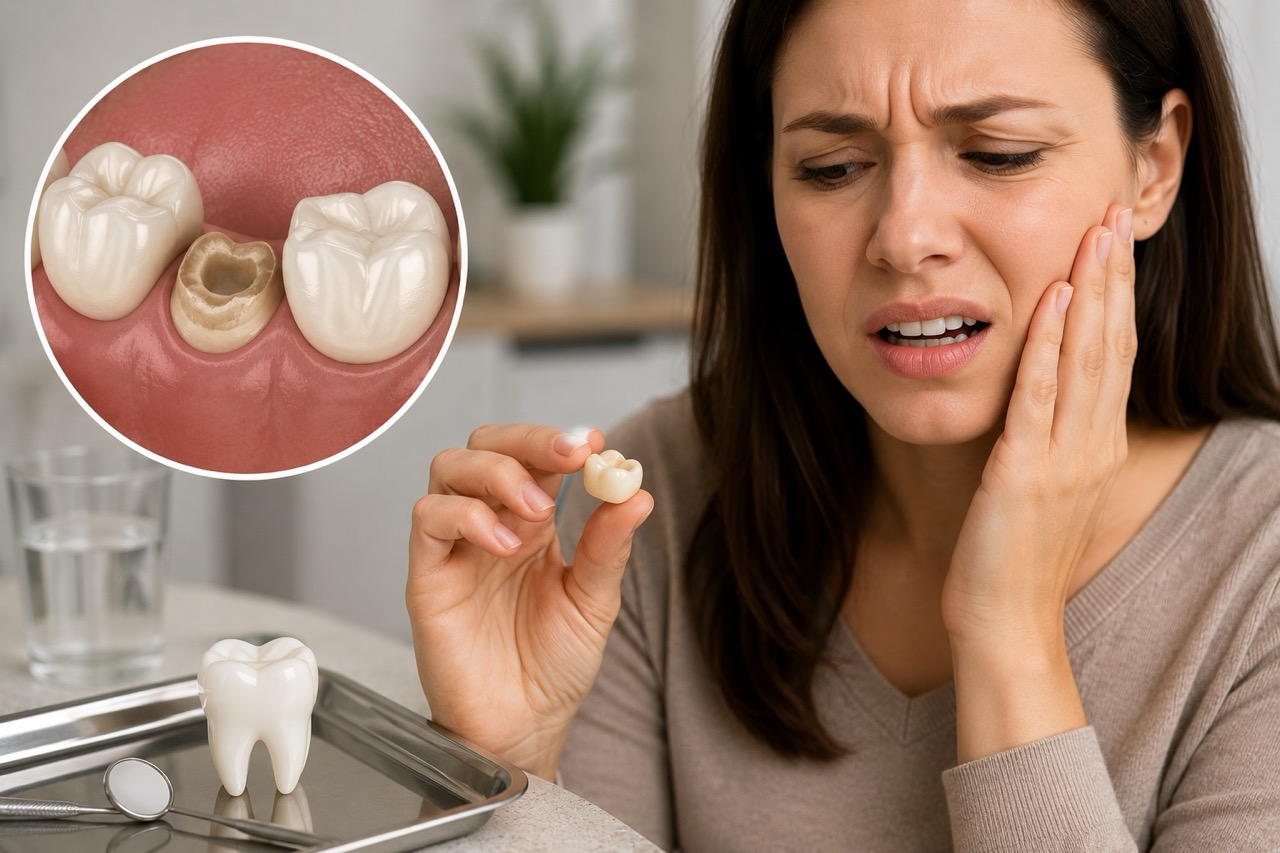
What to Do If a Crown or Filling Falls Out
You bite into something and suddenly feel a strange sensation in your mouth. You run your tongue across your tooth and realize something is missing. A crown or filling falls out more often than most people expect. It can happen from everyday chewing, an old restoration, or an accidental bite on something hard.
The good news is that prompt action protects your tooth and prevents further damage. In this blog, you will learn why it happens, what to do immediately, and when to call your dentist.
Why Do Dental Crowns and Fillings Fall Out?
Dental restorations do not last forever. Normal wear and tear gradually weakens the cement or bonding material that holds them in place. Tooth decay can develop underneath a crown or filling and erode the tooth structure supporting it.
A hard impact or injury can dislodge a restoration without warning.Biting into hard foods or objects puts extreme pressure on restorations. Over time, even a well-placed crown or filling can loosen as the bonding material breaks down naturally.
Common Signs a Crown or Filling May Be Failing
Your tooth often sends warning signals before a restoration completely fails. Watch for these warning signs that a crown or filling may be ready to give way:
- Increased Sensitivity: Sudden sensitivity to hot, cold, or sweet foods often means the seal around a restoration is weakening. The exposed tooth structure underneath reacts to temperature changes and signals that something is wrong.
- Looseness or Movement: If a crown shifts slightly when you bite or feels different than usual, the bonding material may be failing. A loose restoration needs prompt attention before it falls out completely.
- Food Becoming Trapped Around the Restoration: Food catching around a crown or filling edge signals a gap forming between the restoration and tooth. Bacteria accumulate in that gap and accelerate decay underneath the restoration.
- Visible Cracks or Wear: Chips, fractures, or visible wear on a crown or filling surface indicate the restoration is breaking down. A compromised restoration is far more likely to fail unexpectedly during normal chewing.
What Should You Do Immediately If a Crown or Filling Falls Out?
Acting quickly after a crown or filling falls out protects the exposed tooth from further damage. Follow these steps right away to minimize risk and prepare for your dental visit. Here is exactly what to do in the first moments after a restoration comes out:
Stay Calm and Inspect the Area
Take a breath and gently examine the area with your tongue or a clean finger. Check whether the tooth feels sharp, rough, or sensitive to air. Avoid pressing on the exposed tooth. Note any pain or bleeding so you can describe your symptoms clearly when you contact Dr. Galluzzo’s office.
Locate and Save the Crown If Possible
If your crown fell out intact, find it and rinse it gently with warm water. Do not scrub it or use soap. Place it in a small zip bag or container. Bringing the original crown to your appointment gives Dr. Galluzzo the option to re-cement it if the restoration and tooth are still in good condition.
Avoid Chewing on the Affected Side
Keep all chewing pressure away from the exposed tooth until you receive professional care. Soft foods only. The exposed tooth structure is vulnerable to fracture, sensitivity, and bacterial exposure. Even mild chewing force on an unprotected tooth can cause damage that makes the eventual repair more complex and costly.
Contact Your Dentist as Soon as Possible
Even if you are not experiencing pain, it is important to schedule a dental appointment promptly. Delaying treatment can increase the risk of tooth decay, fractures, infection, or additional restoration failure. Contact your dentist, explain what happened, and mention any symptoms you are experiencing so appropriate care can be arranged as quickly as possible.
Should You Put a Lost Crown Back on Yourself?
Temporary crown re-placement can make sense in limited situations, especially if you cannot reach a dentist immediately. Dental cement sold at pharmacies lets patients seat a crown temporarily to protect the tooth and reduce sensitivity. However, improper placement creates real risks.
Swallowing the crown, misaligning the bite, or trapping bacteria underneath can worsen the situation. Temporary measures are exactly that. A dental professional still needs to evaluate the tooth, clean the area, and apply proper bonding material for a secure, lasting result.
Is a Lost Crown or Filling a Dental Emergency?
In most cases, a crown or filling falls out without causing severe pain right away. However, certain situations require immediate emergency dental care. Severe pain or throbbing sensitivity that does not ease signals nerve exposure or active infection. Sharp edges left behind by a broken restoration can cut your tongue, cheek, or gums.
A cracked or fractured underlying tooth is a true emergency that worsens rapidly without treatment. If you experience any of these symptoms, call Dr. Galluzzo’s Fort Lauderdale office immediately for same-day emergency care.
What Happens If You Wait Too Long to Replace a Crown or Filling?
Delaying treatment after a crown or filling falls out creates a chain of problems that grows more serious over time. The exposed tooth needs prompt attention to avoid complications that are far more costly to treat later. Here is what can happen the longer you wait to seek care:
Increased Risk of Tooth Decay
The exposed tooth structure left behind after a crown or filling falls out has no protection from bacteria. Decay spreads rapidly into the unprotected area. What could have been a simple re-cementation may become a filling, root canal, or extraction if decay advances far enough.
Tooth Sensitivity and Discomfort
Without a restoration covering it, the underlying dentin becomes exposed to temperature, pressure, and air. Sensitivity escalates quickly and can interfere with eating, drinking, and daily comfort. Pain that starts mild can intensify significantly within days without any dental intervention.
Tooth Fractures and Structural Damage
An unprotected tooth is vulnerable to fracture during normal biting and chewing. The remaining tooth structure weakens without the support of a crown or filling. A fracture that extends below the gum line may make the tooth impossible to save, turning a simple fix into an extraction.
More Complex and Costly Treatment Needs
Every day without treatment increases the complexity of the repair. A tooth that needed only a re-cemented crown may eventually require a root canal, a new custom crown, or an implant. Prompt care after a crown or filling falls out almost always leads to simpler and less expensive treatment outcomes.
How to Prevent Crowns and Fillings From Falling Out
While dental crowns and fillings are designed to be durable, they are not indestructible. Daily habits, oral hygiene practices, and regular dental care all play an important role in helping restorations remain secure and functional for as long as possible.
To reduce the risk of losing a crown or filling, consider the following preventive measures:
- Maintain Regular Dental Checkups
Routine dental visits allow your dentist to monitor the condition of crowns and fillings, identify early signs of wear, and address minor issues before they become larger problems. - Avoid Chewing Ice and Hard Foods
Biting down on ice, hard candies, popcorn kernels, or other hard objects can place excessive pressure on dental restorations and increase the risk of cracks, loosening, or breakage. - Address Teeth Grinding and Clenching
Chronic grinding or clenching can weaken crowns, fillings, and natural teeth over time. A custom night guard may help protect your smile from unnecessary stress and damage. - Practice Good Oral Hygiene
Brushing twice daily, flossing regularly, and maintaining healthy gums can help prevent decay around crowns and fillings, reducing the likelihood of restoration failure.
Crown or Filling Fell Out? Dr. Galluzzo Is Ready to Help Today.
Do not wait and hope the discomfort goes away on its own. A crown or filling falls out for a reason, and that tooth needs professional attention quickly.
Dr. George Galluzzo has protected Fort Lauderdale smiles for more than 35 years with honest, compassionate emergency dental care. Call today and get the prompt, professional treatment your tooth deserves. New patients also receive a FREE exam and FREE X-ray.
Galleria Dental Group
2300 NE 9th Street, Suite 3
Fort Lauderdale, FL 33304
Phone: (954) 467-8138
Email: office@drgalluzzo.com